
Folks shopping for coverage on their manufactured home usually get a quote, stare at it, and assume the number is fixed. That’s not true. Texas mobile home insurance has more moving parts than almost any other residential policy in the country. Knowing this before you shop is the difference between paying what you have to and paying what you’re told to.
How Mobile Home Insurance Works in Texas
The pushback I hear most often sounds like this: “My neighbor has a stick-built house and pays half what I do. My place is worth less, so why am I paying more?” Fair question, and the answer is real, though it has nothing at all to do with what the property is worth.
Mobile homes are structurally more exposed to certain risks than site-built homes. Insurers price that vulnerability straight into the premium. A wood-framed house on a concrete slab handles high winds one way, and a manufactured home on a lot in La Marque or out near Hempstead handles them another. That gap in structural resilience drives the rate. I’ve watched it add hundreds to an annual quote on homes that looked nearly identical on paper.
Texas sees roughly 135 tornadoes a year. Hail Alley cuts straight through the Dallas-Fort Worth area and the South Plains. Gulf Coast hurricanes arrive on a multi-year cycle. Carriers price every one of those threats into your policy, and they aren’t doing it blindly. They hold decades of Texas claims data, and it tells them what a manufactured home in Waco or outside San Antonio costs them after a major storm. That number is rarely small.
A few years back, I worked with a family who owned a double-wide on a few acres outside Seguin. They’d been with the same insurer for eight years and never questioned the rate. We finally sat down and read the policy. Their coverage levels didn’t match the home’s current value, and they carried no windstorm insurance endorsement at all. Two calls and a policy review later, they had better coverage for less money.
Here’s the key takeaway. Your mobile home insurance premium is not set in stone. You do need to understand the system before you can work it.
What Types of Mobile Homes Can Be Insured in Texas
Does the age of your home change what coverage you can get? It does.
Homes built after June 15, 1976, must meet the federal HUD Code. Those are officially manufactured homes, while homes built before that date count as mobile homes, put together under looser standards. The date matters more than most insurance articles bother to explain. I’ve seen it decide whether a carrier will even quote a property.
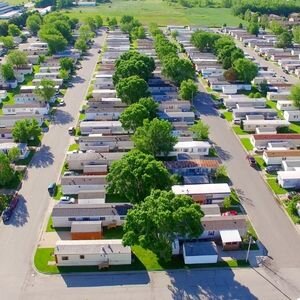
Older pre-HUD units are harder to insure and cost more. Some carriers won’t write a policy on a home older than 20 to 30 years. Single-wide, double-wide, and triple-wide units all land differently on the underwriting worksheet. A double-wide in a managed park in Spring, Texas, gets quoted one way, and a single-wide on raw acreage near Huntsville gets quoted another. Configuration and location do most of the work before an adjuster asks a single question.
Many insurers also decline homes anchored below the current Texas Department of Housing and Community Affairs standard. If your home sits in that gray zone, you still have options, though you’ll need a specialist rather than a general insurance carrier. An independent agency that represents multiple carriers will give you more options than a single company.
Wind zone classification gets overlooked, too. Coastal areas fall under Wind Zone II and III, and homes built to HUD wind zone standards with proper anchoring qualify for better insurance rates. So if your home was built and anchored to current standards, say so upfront. It can move your quote.
What Does Mobile Home Insurance Cover in Texas?
Coverage on a manufactured home follows the same outline as a standard homeowners policy. The gaps show up in different places, and Texas adds a few wrinkles of its own.
Here’s the short version of what’s in and what’s out:
| Included in a standard policy | Not included; buy separately. |
|---|---|
| Structure damage from fire, lightning, windstorm, hail, explosion, vandalism, and theft | Flood damage, through the NFIP or a private flood carrier |
| Personal property such as furniture, appliances, clothing, and electronics | Coastal windstorm, through TWIA, where private carriers won’t write wind |
| Personal liability if someone is hurt on your property | Earthquake damage |
| Additional living expense while your home is uninhabitable | Replacement cost on personal property, added by endorsement |
Additional living expense are the line people forget. It pays for a temporary place to stay after a covered loss, and hotel bills add up fast.
What surprises people is the second column. Standard mobile home policies exclude flood damage, full stop. That’s not a footnote. If you’re in the Houston metro, the Hill Country, or anywhere in East Texas, flooding is a real risk. A base policy does nothing for it. Flood insurance runs through the National Flood Insurance Program or a private carrier, and you buy that policy on its own.
Mobile homes in the 14 Gulf Coast counties and part of Harris County need separate windstorm coverage through the Texas Windstorm Insurance Association when private carriers won’t cover wind. That coverage typically adds $500 to $900 a year. For a homeowner in Galveston or near Corpus Christi, it isn’t optional. Living on the coast is the trade.
Do You Need Extra Policies Beyond Mobile Home Insurance?
A seller I worked with in the Timbergrove area of Houston had done everything right, or so she thought. Solid base policy, paid on time, never a claim. Then a spring rainstorm dumped six inches of water into her home in four hours. Her insurance carrier covered the wind damage to her roof, while the flood damage inside fell outside the policy entirely. She got nothing for it.

Flood insurance is separate, and it’s worth buying across much of Texas. Houston ranks among the most flood-prone metros in the country. Flood policies through the NFIP or a private carrier are not part of standard mobile home coverage. If you’re wondering whether you need extra protection, the honest answer is probably yes, depending on where you live.
A few other gaps are worth knowing. Earthquake coverage is excluded from virtually every standard policy in Texas, though the risk here stays low. Personal property limits are easy to overlook. The default limit often replaces belongings at actual cash value rather than replacement cost, so depreciation hits you at claim time. An endorsement for replacement cost closes that gap. I’ve seen it run just a few dollars a month.
Do you have a detached storage building or a carport? Check whether it falls under your “other structures” limit. Many people assume more is covered than actually is. A five-minute call with your agent before a storm beats the same call after one. In my experience that call almost never happens until it’s too late.
What Discounts Can Lower Your Mobile Home Insurance Premium
For a long time, I thought discounts on manufactured home policies were mostly symbolic. A few percentage points carriers dangled to look competitive. Wrong. The bundling discount alone moves real money.
Pairing a mobile home policy with an auto policy at the same carrier can cut 10 to 20 percent off each one. On a $1,200-a-year home policy, that’s $120 to $240 back in your pocket. Your coverage doesn’t change at all. Bring your auto policy into the conversation the moment you start shopping for insurance.
Homes built to the Federal Manufactured Home Construction and Safety Standards tend to qualify for discounts. Smoke detectors, security systems, and proper tie-downs cut costs further, because carriers read those features as claim-reduction tools and price accordingly.
Claim forgiveness kicks in after five claim-free years with some carriers. It freezes your rate against an increase tied to one future claim. In hail country around Lubbock or Abilene, storm claims are close to inevitable over a decade of ownership. That protection deserves attention when you compare policies.
Raising your “all other perils” deductible is a smart move for most Texas mobile home owners. Keep the wind and hail deductible at the lowest available percentage. Most claims here come from wind and hail, and the “all-other-perils” side rarely gets triggered. Moving from a $500 to a $1,500 deductible can cut your annual premium without adding much out-of-pocket risk.
How Much Does Mobile Home Insurance Cost in Texas?
Average premiums for mobile home insurance in Texas run between $1,000 and $3,200 a year. The highest rates sit along the Gulf Coast, where wind and hail exposure is greatest. Geography explains most of that spread.

Owners in coastal and Tornado Alley locations see premiums pushed well higher. A homeowner in a lower-risk area like the Permian Basin or far West Texas often lands near the bottom of the range. El Paso sits in the desert, far from hurricane tracks and with mild hail exposure, so it carries some of the lowest manufactured home insurance rates in the state. That surprises plenty of buyers shopping there.
For context, the Texas Department of Insurance puts the average annual homeowners’ premium statewide at $3,291. That is for homeowners’ policies only, not renters, condo, or mobile home coverage. A manufactured home policy in the middle of that $1,000 to $3,200 range comes in under the statewide figure.
Coastal exposure is the single biggest cost driver. Hail runs a close second. In the DFW Metroplex or the South Plains around Lubbock, a single deductible on a bundled auto and home policy pays off when one storm damages your roof and your vehicle. That isn’t a marketing pitch. That’s math. If your home sits in that corridor and the numbers have stopped working, you can sell your mobile home in Fort Worth, TX, without listing it.
Age and condition matter as much as location. Older homes draw higher rates unless the wiring and plumbing have been updated. An older single-wide in Nacogdoches with original plumbing and no tie-down updates costs more to insure than a newer double-wide in a managed park in Round Rock. The Nacogdoches home may carry the lower market value. That surprises sellers who assume age and price move together.
What to Do If You Cannot Find Mobile Home Coverage in Texas
What happens when you’ve called four carriers and all four said no?
Most major national insurers write limited manufactured home coverage in Texas, especially in coastal and high-risk zones. Getting turned down by a household name doesn’t mean you’re out of options. It means you look at the specialists and the market of last resort.
Foremost and American Modern are the most consistently available specialists in the state, and State Farm is one of the few national names that still writes manufactured homes here. All three carry strong AM Best financial strength ratings across varied Texas risk profiles. Start there when the general carriers pass, since Foremost in particular has a long track record on older units and coastal-zone homes.
If those doors close, there’s the Texas FAIR Plan. State legislation created the Texas FAIR Plan Association in 1995, and it became operational in 2002. It offers residential property insurance to people shut out of the private market, and it does not compete with that market.
To qualify, you must have been declined by at least two insurers actively writing residential property policies in Texas. The FAIR Plan offers homeowners, dwelling, condo, and tenant coverage. The average annual cost for a homeowner’s policy runs around $1,440. That price sounds reasonable, and the coverage behind it is thinner. FAIR Plan policies cost more relative to what you get and cover less than a standard carrier does. Exhaust your independent agent options first.
How to Find the Right Mobile Home Insurance Agent in Texas
Picking an agent who doesn’t specialize in manufactured homes costs you more than money. It leaves you with coverage gaps you won’t find until the day you file a claim.
The best policy for a mobile home in Brownsville isn’t the best policy for an identical unit in Amarillo. Someone who handles mostly conventional homeowner’s policies may not know this market well enough to place you correctly. That’s not an insult. It’s a specialty, same as any other.
An independent agent can shop your risk across multiple companies at once. A captive agent tied to one carrier cannot. The mobile home market in Texas is smaller than the standard homeowners market, though it’s far from a one-carrier world. Carriers treat this segment very differently. One may penalize older homes heavily and still quote competitively on newer units. You won’t know which carrier favors your profile until someone runs the comparison.
Ask any agent three things. Do they write manufactured home policies regularly? Which carriers do they have access to for that specific product? Do they know the TWIA windstorm certification process for coastal properties? If they hesitate on any of the three, keep looking.
When you’re weighing your overall financial position on a manufactured home, Jeff Buys Mobile Homes is worth knowing about. We work specifically with Texas manufactured home owners, and we’ll give you an honest read on your options, whether that means staying and insuring the place properly or selling and moving on. That honest read is rarer than it should be.
How to Get an Online Quote for Mobile Home Insurance
Fill out a form, get three quotes in five minutes, and pick the cheapest. That’s how people expect the process to go. Reality is messier, and the gap between expectation and outcome is where coverage problems start.
Online quote tools for manufactured homes are less standardized than the ones built for conventional houses. Many general insurance sites start the process, then stop cold at the “mobile home” selection and route you to a phone call. That isn’t a flaw. It’s the market telling you something. This part needs more underwriting detail, and carriers price it that way.
Before you open any quote tool, make sure you know:
- The year your home was built
- The HUD certification label number, if you have it
- The size in square feet
- Whether the home sits on a permanent foundation or on anchors
- Your ZIP code
- The estimated replacement cost of the structure
That last one usually trips people up. Replacement cost is not market value. It’s what rebuilding or replacing the unit from scratch would cost today.
Foremost ranks as the strongest all-around mobile home carrier in Texas. It handles older units well and offers an extended replacement cost option. Its online system quotes manufactured homes without rerouting you. Progressive’s site works much the same way and lets you quote the mobile home alongside your auto policy in one session.
Compare at least three quotes before you decide. I once worked through quotes with a woman near Pflugerville who was settling her late father’s estate and going through a divorce at the same time. The double-wide had sat without updated coverage for two years. She had no time to chase agents, so we pulled two quotes online and then worked the phone with one insurance specialist. The specialist beat both online quotes by $200 a year and offered better windstorm terms. The third call paid off.
Sometimes the property stops fitting your plans, whether from an estate, a life change, or costs that no longer pencil out. That’s where We Buy Mobile Homes Texas comes in. Jeff Buys Mobile Homes buys Texas-manufactured homes directly, with no agent fees and no repairs required. That holds whether you need to sell your mobile home fast in Houston or sell a mobile home in Corpus Christi, TX.
Frequently Asked Questions
Can You Insure a 30-Year-Old Mobile Home?
You can, though your options narrow as the age climbs. A home built after June 1976 falls under the HUD Code, which helps its chances with a carrier. Plenty of companies still cap the age they will write at 20 to 30 years. Your best route is an independent agent with access to specialty carriers like Foremost or American Modern. Both hold more flexibility on older units than general market insurance companies do. Updates to wiring, plumbing, and tie-downs make a real difference in whether you get coverage and what you pay.
Is It Expensive to Insure a Mobile Home?
Relative to the home’s value, yes, more than most people expect. Texas ranks among the pricier states for manufactured home insurance. The mix of hurricane, tornado, hail, and flood exposure drives that. Premiums still vary widely by location, home age, and the coverage choices you make on the policy. Staying claims-free, bundling with your auto policy, and keeping the home well-maintained are the three most reliable ways to hold the cost down.
What Is the Best Mobile Home Insurance in Texas?
There’s no single answer for every homeowner. Foremost usually tops the list for all-around value, thanks to its handling of older units and its extended replacement cost option. Farmers writes one of the most customizable mobile home policies in Texas. Its endorsement list is long and includes green-home improvements, identity theft, and personal property replacement cost. The right pick depends on your home’s age, your location, and whether you need coastal windstorm or flood add-ons.
What Is the Best Insurance Company for a Mobile Home?
The answer shifts with your situation. The same carrier names come up most often, and each holds a solid AM Best rating across a wide spread of Texas risk profiles. For bundling with auto, Progressive’s single-deductible feature pays off in hail-heavy areas. Work with an independent agent who can run your profile through several carriers at once. That process surfaces the real best fit, not just the best-known brand.
If the coverage options feel confusing, or the costs have you rethinking the property altogether, you don’t have to sort it out alone. Jeff Buys Mobile Homes works with Texas manufactured home owners in every kind of situation. No pressure, no obligation. Just an honest conversation about what makes sense for you. Contact us when you’re ready.
Helpful Texas Blog Articles
- How Long Does It Take To Sell A Mobile Home In Texas
- How to Sell a Mobile Home By Owner in Texas
- Can You Sell a Mobile Home Without a Title in Texas?
- How To Get A Statement Of Ownership For Your Mobile Home In Texas
- Mobile Home Insurance Cost in Texas
- How to Sell a Mobile Home to an Investor
- What Texas Homeowners Actually Pay To Move A Mobile Home
- Can a Mobile Home Park Take Your Mobile Home
- Can You Sell a Mobile Home Without a Serial Number